


Can gravure water-based ink truly balance environmental friendliness and high-performance printing?
Release Time : 2025-12-24
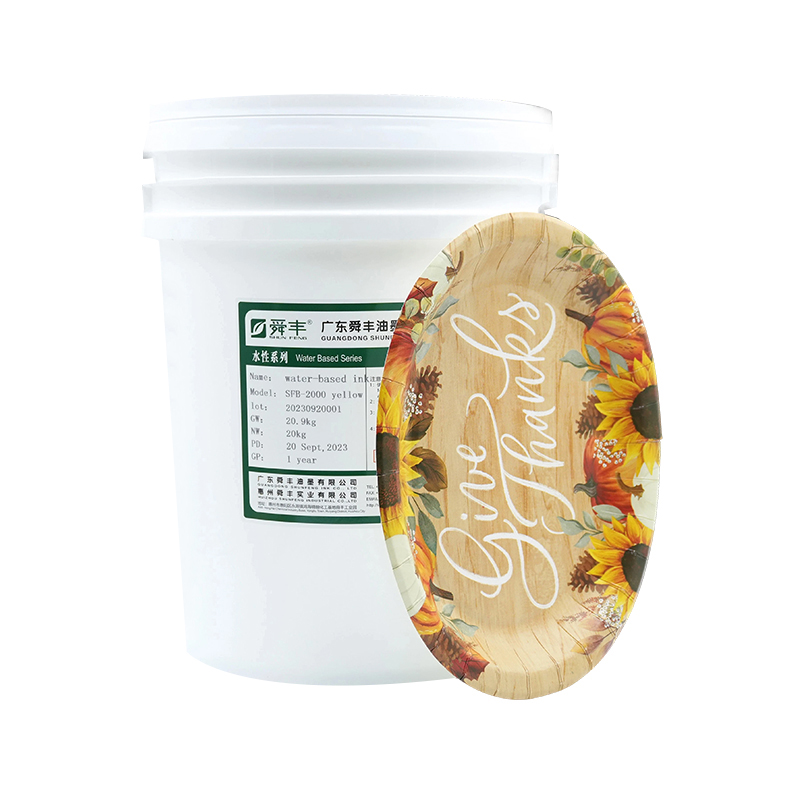
Driven by increasingly stringent environmental regulations and growing consumer awareness of green practices, traditional solvent-based inks are being rapidly replaced by more sustainable alternatives in flexible packaging printing. Among these, water-based inks, specifically developed for gravure printing, have gained significant traction in flexible substrate printing such as clothing tags, courier bags, and woven bags due to their low volatile organic compound (VOC) emissions, excellent adhesion, and good printability, becoming a key material driving the industry's green upgrade.
Gravure printing, with its high efficiency, high precision, and suitability for mass production, has long dominated commercial printing on plastic films, paper, and composite materials. However, traditional gravure printing relies on organic solvents such as benzene and ketones as carriers, generating significant VOC pollution and posing flammable and explosive safety hazards. In contrast, gravure water-based ink uses water as the primary dispersion medium, supplemented with a small amount of environmentally friendly co-solvents, significantly reducing harm to the environment and operators. During the printing process, the main volatile organic compound (VOC) is water vapor, eliminating the need for complex waste gas treatment systems and significantly reducing end-of-pipe treatment costs. This aligns with the national "dual-carbon" strategy and the "Technical Policy for the Prevention and Control of Volatile Organic Compound Pollution."
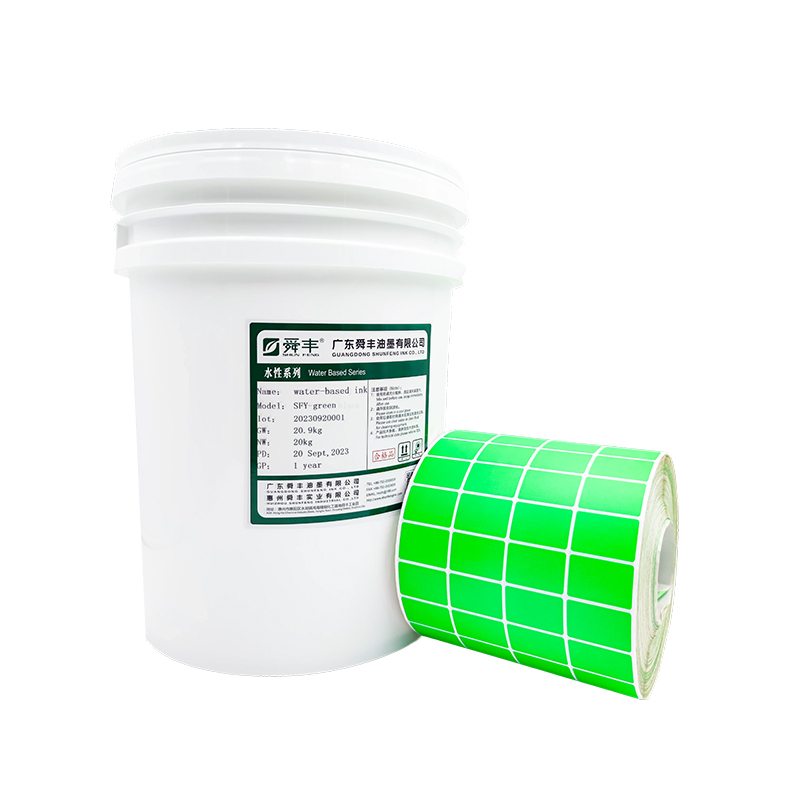
For applications in the apparel industry, gravity water-based inks must exhibit excellent wettability and abrasion resistance to synthetic fiber materials such as polyester, nylon, and non-woven fabrics. Modern water-based inks, by incorporating film-forming resins such as acrylic emulsions and polyurethane dispersions and optimizing pigment dispersion systems, produce vibrant colors and distinct layers in printed materials, and are resistant to fading and cracking after washing or dry cleaning. Especially in the printing of small items such as clothing tags, care labels, and packaging bags, water-based inks can not only achieve fine text and high-saturation patterns but also be completed at high speeds using flexographic or rotary gravure printing equipment, meeting the short-cycle, high-batch production needs of fast fashion brands.
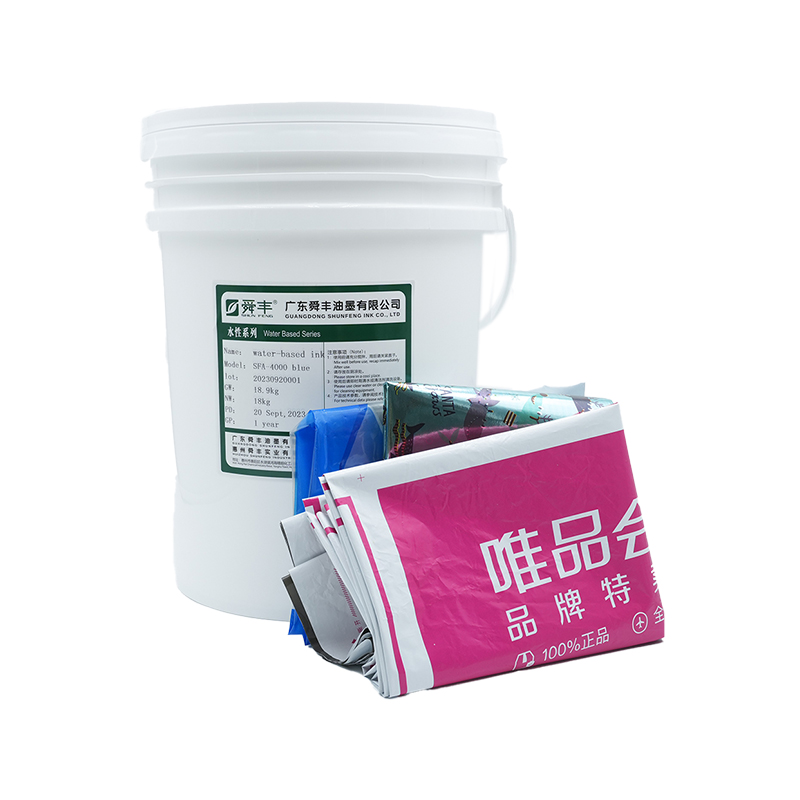
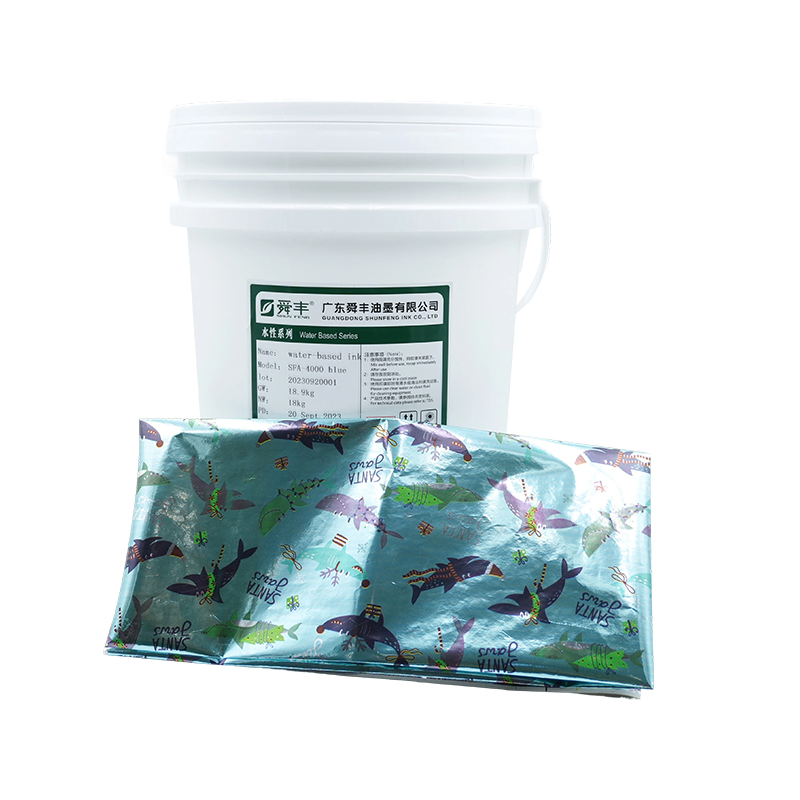
The application of water-based inks is even more significant in the printing of express delivery bags. With the explosive growth of e-commerce logistics, the daily printing demand for hundreds of millions of express delivery bags poses a severe challenge to environmental protection. Traditional solvent-based inks exhibit poor adhesion to non-polar plastics such as PE and PP, often requiring corona treatment or the addition of chlorinated polyolefin (CPO) resins. However, novel gravity water-based inks, through molecular structure design, can directly form a robust ink layer on untreated films. Some products also possess scratch resistance, low-temperature resistance (not brittle at -20°C), and fast drying properties, making them suitable for automated sorting and long-distance transportation environments. More importantly, express delivery bags printed with water-based inks can more easily enter recycling systems, avoiding solvent residue contamination of the recycled plastic stream and contributing to the development of a circular economy.
Technological advancements continue to break through the performance bottlenecks of water-based inks. Early water-based systems suffered from slow drying, low gloss, and poor overprinting properties, but these problems have now been significantly alleviated through nano-pigment technology, efficient water-based binders, and infrared/hot air combined drying systems. High-end gravity water-based inks can even achieve dot reproduction rates and color consistency comparable to solvent-based inks, meeting brands' stringent requirements for visual consistency.
Furthermore, the supply chain security of water-based inks is superior to that of solvent-based products. Its raw materials are mostly water-based polymers and inorganic pigments, making it less susceptible to fluctuations in oil prices. Furthermore, storage and transportation do not require explosion-proof measures, reducing operational risks for businesses. An increasing number of ink manufacturers offer customized services, adjusting formulations based on customer substrate type, printing speed, and post-processing techniques (such as lamination and hot stamping) to ensure optimal compatibility.
In the context of global sustainable development trends, gravure water-based ink is no longer just a passive choice for environmental compliance, but also a proactive strategy for companies to enhance their brand image and expand their green supply chains. From a clearly printed courier bag to a durable, fade-resistant clothing tag, water-based inks are subtly reshaping the ecological foundation of flexible packaging printing. In the future, with the introduction of innovative materials such as bio-based resins and biodegradable additives, gravel water-based ink will achieve a higher level of balance between performance and environmental protection, becoming an irreversible mainstream direction for green printing.
Gravure printing, with its high efficiency, high precision, and suitability for mass production, has long dominated commercial printing on plastic films, paper, and composite materials. However, traditional gravure printing relies on organic solvents such as benzene and ketones as carriers, generating significant VOC pollution and posing flammable and explosive safety hazards. In contrast, gravure water-based ink uses water as the primary dispersion medium, supplemented with a small amount of environmentally friendly co-solvents, significantly reducing harm to the environment and operators. During the printing process, the main volatile organic compound (VOC) is water vapor, eliminating the need for complex waste gas treatment systems and significantly reducing end-of-pipe treatment costs. This aligns with the national "dual-carbon" strategy and the "Technical Policy for the Prevention and Control of Volatile Organic Compound Pollution."
For applications in the apparel industry, gravity water-based inks must exhibit excellent wettability and abrasion resistance to synthetic fiber materials such as polyester, nylon, and non-woven fabrics. Modern water-based inks, by incorporating film-forming resins such as acrylic emulsions and polyurethane dispersions and optimizing pigment dispersion systems, produce vibrant colors and distinct layers in printed materials, and are resistant to fading and cracking after washing or dry cleaning. Especially in the printing of small items such as clothing tags, care labels, and packaging bags, water-based inks can not only achieve fine text and high-saturation patterns but also be completed at high speeds using flexographic or rotary gravure printing equipment, meeting the short-cycle, high-batch production needs of fast fashion brands.
The application of water-based inks is even more significant in the printing of express delivery bags. With the explosive growth of e-commerce logistics, the daily printing demand for hundreds of millions of express delivery bags poses a severe challenge to environmental protection. Traditional solvent-based inks exhibit poor adhesion to non-polar plastics such as PE and PP, often requiring corona treatment or the addition of chlorinated polyolefin (CPO) resins. However, novel gravity water-based inks, through molecular structure design, can directly form a robust ink layer on untreated films. Some products also possess scratch resistance, low-temperature resistance (not brittle at -20°C), and fast drying properties, making them suitable for automated sorting and long-distance transportation environments. More importantly, express delivery bags printed with water-based inks can more easily enter recycling systems, avoiding solvent residue contamination of the recycled plastic stream and contributing to the development of a circular economy.
Technological advancements continue to break through the performance bottlenecks of water-based inks. Early water-based systems suffered from slow drying, low gloss, and poor overprinting properties, but these problems have now been significantly alleviated through nano-pigment technology, efficient water-based binders, and infrared/hot air combined drying systems. High-end gravity water-based inks can even achieve dot reproduction rates and color consistency comparable to solvent-based inks, meeting brands' stringent requirements for visual consistency.
Furthermore, the supply chain security of water-based inks is superior to that of solvent-based products. Its raw materials are mostly water-based polymers and inorganic pigments, making it less susceptible to fluctuations in oil prices. Furthermore, storage and transportation do not require explosion-proof measures, reducing operational risks for businesses. An increasing number of ink manufacturers offer customized services, adjusting formulations based on customer substrate type, printing speed, and post-processing techniques (such as lamination and hot stamping) to ensure optimal compatibility.
In the context of global sustainable development trends, gravure water-based ink is no longer just a passive choice for environmental compliance, but also a proactive strategy for companies to enhance their brand image and expand their green supply chains. From a clearly printed courier bag to a durable, fade-resistant clothing tag, water-based inks are subtly reshaping the ecological foundation of flexible packaging printing. In the future, with the introduction of innovative materials such as bio-based resins and biodegradable additives, gravel water-based ink will achieve a higher level of balance between performance and environmental protection, becoming an irreversible mainstream direction for green printing.