


How does Flexo water-based ink safeguard the safety and environmental protection of tableware printing with its green formula?
Release Time : 2025-12-25
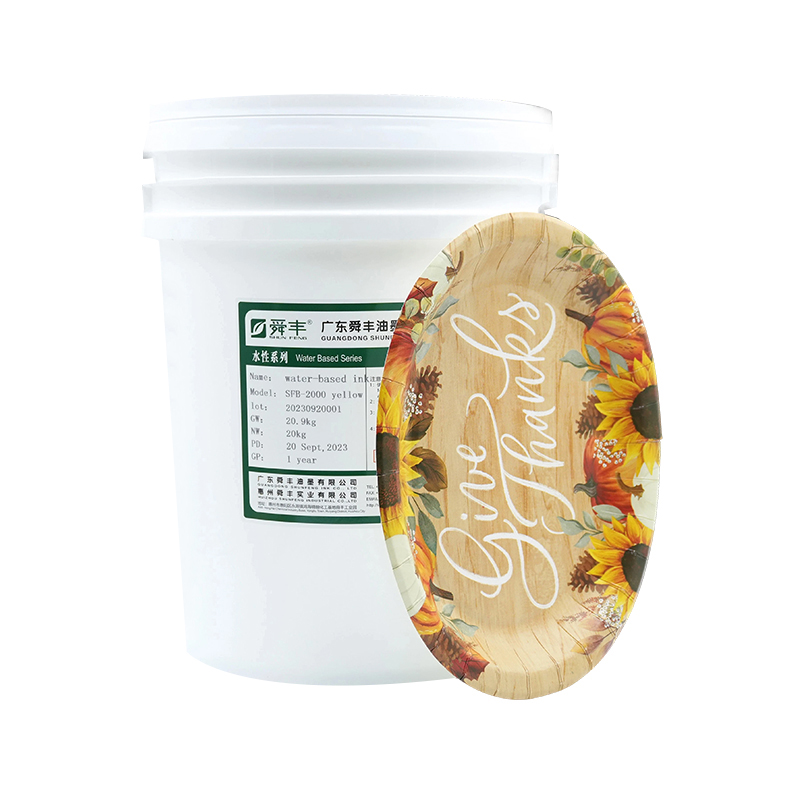
With increasingly stringent global requirements for food safety and environmental protection, traditional solvent-based inks, containing volatile organic compounds (VOCs) and posing potential migration risks, are no longer sufficient to meet the printing needs of modern food packaging, especially disposable tableware (such as paper cups, lunch boxes, straws, and paper plates). Flexo water-based ink—made with water as the dispersion medium and refined from food-grade raw materials—is becoming an irreplaceable green solution in the tableware printing field due to its non-toxic, low-odor, biodegradable, and excellent printability. It not only gives products a bright and beautiful visual effect but also builds a safety barrier on an unseen level.
The core advantage of Flexo water-based ink for tableware is primarily reflected in its strict food safety compliance. All components are made from raw materials that comply with international and domestic food contact material regulations such as FDA 21 CFR, EU 10/2011, and GB 4806, including high-purity acrylic resin, food-grade pigments, heavy metal-free color pastes, and environmentally friendly additives. After curing, the ink forms a dense film that effectively prevents pigment migration into food, maintaining chemical stability even when containing hot drinks, oily foods, or acidic foods. Some high-end products have passed third-party testing for "total migration" and "specific migration," ensuring that even accidental ingestion of trace amounts of ink residue will not harm health.
In terms of environmental performance, water-based inks exhibit significant advantages. Their VOC content is typically below 5%, far superior to the 30%–70% of solvent-based inks, significantly reducing air pollution in printing workshops and health risks to operators. Cleaning printing plates and anilox rollers requires only water or a mild alkaline cleaning agent, avoiding the use of strong solvents and reducing wastewater treatment difficulties. Waste printed materials are more easily degraded under natural conditions or can be directly incorporated into paper recycling systems, without contaminating recycled pulp due to ink residue. This "pollution reduction at the source" concept allows brands to easily achieve ESG goals and green certifications (such as FSC and OK Compost).
Printability and drying efficiency have also been carefully optimized. Despite using water as a carrier, modern tableware inks employ nanoscale pigment dispersion and fast-drying resin technology to achieve high color strength, excellent leveling properties, and rapid penetration and drying. On high-speed flexographic printing presses (up to 300 meters per minute), the ink is rapidly absorbed by the paper substrate and surface-dries, preventing smudging; simultaneously, it maintains a flexible film layer, adapting to subsequent processing such as paper cup winding and lunchbox die-cutting without cracking or peeling. Color reproduction is accurate, consistently reproducing brand standard colors and meeting the stringent requirements of commercial printing.
Furthermore, ink formulations are customized for different substrates. Inks for coated paper cups require high-temperature resistance (>90°C) and water vapor resistance; inks for PLA biodegradable lunchboxes emphasize compostability; and inks for straw printing require extremely low odor and high adhesion. Manufacturers ensure superior ink performance on various substrates by adjusting the resin system, crosslinking agent ratio, and surfactant type.
On the production side, water-based inks simplify equipment investment and safety management. No explosion-proof ventilation systems, solvent recovery devices, or complex waste gas treatment equipment are needed, reducing factory construction and operating costs. The operating environment is safer and more comfortable, improving employee satisfaction and production continuity.
When consumers sip coffee from a paper cup with a clearly printed logo or open a beautifully illustrated takeout box, behind the vibrant designs lies flexo water-based ink's silent commitment to both safety and environmental protection. It's understated yet reliable; odorless yet durable. Because in the world of food contact materials, true color must be built on a foundation of absolute safety—and flexo water-based ink is the best practitioner of this belief.
The core advantage of Flexo water-based ink for tableware is primarily reflected in its strict food safety compliance. All components are made from raw materials that comply with international and domestic food contact material regulations such as FDA 21 CFR, EU 10/2011, and GB 4806, including high-purity acrylic resin, food-grade pigments, heavy metal-free color pastes, and environmentally friendly additives. After curing, the ink forms a dense film that effectively prevents pigment migration into food, maintaining chemical stability even when containing hot drinks, oily foods, or acidic foods. Some high-end products have passed third-party testing for "total migration" and "specific migration," ensuring that even accidental ingestion of trace amounts of ink residue will not harm health.
In terms of environmental performance, water-based inks exhibit significant advantages. Their VOC content is typically below 5%, far superior to the 30%–70% of solvent-based inks, significantly reducing air pollution in printing workshops and health risks to operators. Cleaning printing plates and anilox rollers requires only water or a mild alkaline cleaning agent, avoiding the use of strong solvents and reducing wastewater treatment difficulties. Waste printed materials are more easily degraded under natural conditions or can be directly incorporated into paper recycling systems, without contaminating recycled pulp due to ink residue. This "pollution reduction at the source" concept allows brands to easily achieve ESG goals and green certifications (such as FSC and OK Compost).
Printability and drying efficiency have also been carefully optimized. Despite using water as a carrier, modern tableware inks employ nanoscale pigment dispersion and fast-drying resin technology to achieve high color strength, excellent leveling properties, and rapid penetration and drying. On high-speed flexographic printing presses (up to 300 meters per minute), the ink is rapidly absorbed by the paper substrate and surface-dries, preventing smudging; simultaneously, it maintains a flexible film layer, adapting to subsequent processing such as paper cup winding and lunchbox die-cutting without cracking or peeling. Color reproduction is accurate, consistently reproducing brand standard colors and meeting the stringent requirements of commercial printing.
Furthermore, ink formulations are customized for different substrates. Inks for coated paper cups require high-temperature resistance (>90°C) and water vapor resistance; inks for PLA biodegradable lunchboxes emphasize compostability; and inks for straw printing require extremely low odor and high adhesion. Manufacturers ensure superior ink performance on various substrates by adjusting the resin system, crosslinking agent ratio, and surfactant type.
On the production side, water-based inks simplify equipment investment and safety management. No explosion-proof ventilation systems, solvent recovery devices, or complex waste gas treatment equipment are needed, reducing factory construction and operating costs. The operating environment is safer and more comfortable, improving employee satisfaction and production continuity.
When consumers sip coffee from a paper cup with a clearly printed logo or open a beautifully illustrated takeout box, behind the vibrant designs lies flexo water-based ink's silent commitment to both safety and environmental protection. It's understated yet reliable; odorless yet durable. Because in the world of food contact materials, true color must be built on a foundation of absolute safety—and flexo water-based ink is the best practitioner of this belief.