


How does Flexo water-based ink for tableware, with its high color saturation, make tableware patterns more vibrant and eye-catching?
Release Time : 2026-01-14
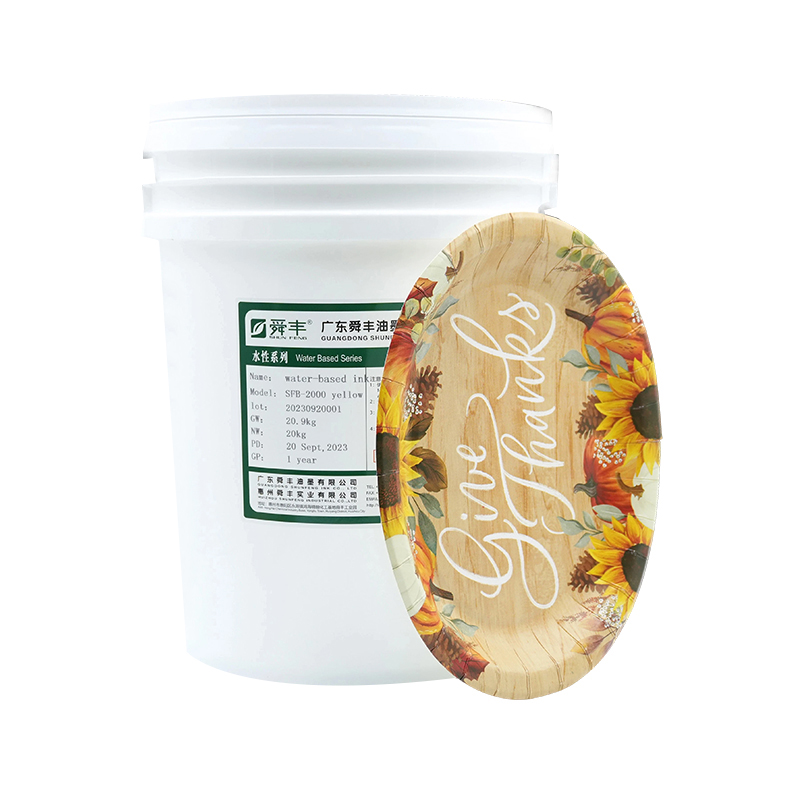
Driven by consumption upgrades and personalized demands, modern tableware has long transcended its basic function of "serving food," becoming an important carrier of table aesthetics and brand expression. Whether it's cartoon characters on children's plates, gold foil patterns on high-end bone china cups, or natural illustrations on eco-friendly bamboo fiber bowls, the visual expressiveness of the pattern directly determines the product's appeal and added value. As a key material for realizing these exquisite designs, Flexo water-based ink for tableware, with its superior high color saturation, is making tableware patterns appear more vibrant, bright, and eye-catching than ever before, while also meeting food safety and environmental protection requirements.
1. Pure Pigment System: Laying the Foundation for High-Saturation Colors
Flexo water-based ink for tableware uses high-purity, high-tinting-power organic pigments or food-grade inorganic pigments, abandoning the easily yellowing and migrating dye components found in traditional solvent-based inks. These pigments undergo nano-level grinding and surface modification, resulting in uniform particle size and high dispersion in water-based resin systems, preventing color dullness caused by agglomeration. For example, vibrant lemon yellow, deep cobalt blue, and rich tomato red spot colors can achieve over 95% Pantone color reproduction through precise formulation. This "what you see is what you get" color performance makes tableware designs instantly stand out on the shelf.
2. Water-based Resin Film-forming Technology: Locking in Color, Enhancing Gloss and Adhesion
High color saturation depends not only on the pigments themselves but also on the support of high-quality film-forming resins. The water-based inks for tableware flexographic printing use acrylic emulsions or polyurethane dispersions as binders, forming a transparent, dense, and flexible film after drying. This film has a refractive index close to that of glass or ceramic glaze, effectively reducing light scattering and enhancing color transparency; it also possesses excellent adhesion, firmly bonding even to curved, frosted, or low-temperature sintered tableware surfaces, preventing fading and peeling due to washing or friction. Some high-end products also incorporate micro-crosslinking agents, forming a network structure under room temperature or low-temperature baking, further enhancing their resistance to boiling and dishwasher use.
3. Flexographic Printing Suitability: Precisely Reproducing Complex Pattern Details
Flexographic printing, with its advantages of clear dots, precise registration, and suitability for continuous roll-to-roll production, is widely used in the decoration of molded pulp tableware, biodegradable PLA lunch boxes, and paper packaging. The low viscosity and good leveling properties of water-based inks allow for perfect filling of fine flexographic dots, faithfully reproducing gradient transitions, small text, and high-contrast images. High-saturation colors appear more vivid in subtle layers—such as the light and shadow variations in fruit textures and the soft edges of animal fur, all enhanced by the purity of the colors, resulting in a more three-dimensional and realistic effect.
4. Safe and Environmentally Friendly Formula: Vibrant Colors Without Sacrificing Health
Tableware comes into direct contact with food, making ink safety paramount. Flexographic water-based inks use water as a diluent and do not contain toxic volatile organic compounds such as benzene, ketones, or esters. Both pigments and resins have passed heavy metal and migration tests, ensuring that harmful substances will not leach out even in high-temperature, acidic, or oily environments. Consumers can enjoy visual beauty without worrying about health risks, truly achieving "beautiful and safe."
5. Synergistic with Tableware Materials: Amplifying Color Expression
Different tableware substrates significantly impact color presentation. White pulp molded plates provide a highly reflective background, making water-based ink colors brighter; transparent PLA cups achieve a "printed inside, seen from the outside" transparency effect; while matte ceramic glazes give patterns a soft and sophisticated feel. Flexo water-based inks can be formulated according to substrate characteristics—such as increasing opacity for dark substrates or enhancing transparency for overprinting—maximizing the advantages of high saturation, making each piece of tableware a unique visual work of art.
The high color saturation of flexo water-based ink for tableware is the result of collaborative innovation in materials science, printing technology, and safety standards. It transforms patterns from mere decoration into a medium for emotional expression and brand value. In an era where green consumption and the aesthetic economy go hand in hand, this ink, which can both "amaze the eyes" and "protect food safety," is redefining the aesthetic boundaries of tableware and injecting more color and warmth into sustainable living.
1. Pure Pigment System: Laying the Foundation for High-Saturation Colors
Flexo water-based ink for tableware uses high-purity, high-tinting-power organic pigments or food-grade inorganic pigments, abandoning the easily yellowing and migrating dye components found in traditional solvent-based inks. These pigments undergo nano-level grinding and surface modification, resulting in uniform particle size and high dispersion in water-based resin systems, preventing color dullness caused by agglomeration. For example, vibrant lemon yellow, deep cobalt blue, and rich tomato red spot colors can achieve over 95% Pantone color reproduction through precise formulation. This "what you see is what you get" color performance makes tableware designs instantly stand out on the shelf.
2. Water-based Resin Film-forming Technology: Locking in Color, Enhancing Gloss and Adhesion
High color saturation depends not only on the pigments themselves but also on the support of high-quality film-forming resins. The water-based inks for tableware flexographic printing use acrylic emulsions or polyurethane dispersions as binders, forming a transparent, dense, and flexible film after drying. This film has a refractive index close to that of glass or ceramic glaze, effectively reducing light scattering and enhancing color transparency; it also possesses excellent adhesion, firmly bonding even to curved, frosted, or low-temperature sintered tableware surfaces, preventing fading and peeling due to washing or friction. Some high-end products also incorporate micro-crosslinking agents, forming a network structure under room temperature or low-temperature baking, further enhancing their resistance to boiling and dishwasher use.
3. Flexographic Printing Suitability: Precisely Reproducing Complex Pattern Details
Flexographic printing, with its advantages of clear dots, precise registration, and suitability for continuous roll-to-roll production, is widely used in the decoration of molded pulp tableware, biodegradable PLA lunch boxes, and paper packaging. The low viscosity and good leveling properties of water-based inks allow for perfect filling of fine flexographic dots, faithfully reproducing gradient transitions, small text, and high-contrast images. High-saturation colors appear more vivid in subtle layers—such as the light and shadow variations in fruit textures and the soft edges of animal fur, all enhanced by the purity of the colors, resulting in a more three-dimensional and realistic effect.
4. Safe and Environmentally Friendly Formula: Vibrant Colors Without Sacrificing Health
Tableware comes into direct contact with food, making ink safety paramount. Flexographic water-based inks use water as a diluent and do not contain toxic volatile organic compounds such as benzene, ketones, or esters. Both pigments and resins have passed heavy metal and migration tests, ensuring that harmful substances will not leach out even in high-temperature, acidic, or oily environments. Consumers can enjoy visual beauty without worrying about health risks, truly achieving "beautiful and safe."
5. Synergistic with Tableware Materials: Amplifying Color Expression
Different tableware substrates significantly impact color presentation. White pulp molded plates provide a highly reflective background, making water-based ink colors brighter; transparent PLA cups achieve a "printed inside, seen from the outside" transparency effect; while matte ceramic glazes give patterns a soft and sophisticated feel. Flexo water-based inks can be formulated according to substrate characteristics—such as increasing opacity for dark substrates or enhancing transparency for overprinting—maximizing the advantages of high saturation, making each piece of tableware a unique visual work of art.
The high color saturation of flexo water-based ink for tableware is the result of collaborative innovation in materials science, printing technology, and safety standards. It transforms patterns from mere decoration into a medium for emotional expression and brand value. In an era where green consumption and the aesthetic economy go hand in hand, this ink, which can both "amaze the eyes" and "protect food safety," is redefining the aesthetic boundaries of tableware and injecting more color and warmth into sustainable living.